

Packaging pharmaceutical and nutraceutical products for resource efficiency and circularity
The pharmaceutical and nutraceutical packaging of the future combines intelligent packaging design with efficient use of resources and a high degree of circularity. Whatever stage you have reached in developing your packaging solution, we can help you create a solution that meets your functional, technical and environmental requirements.
Why sustainable packaging is becoming essential
From an industry trend to the new standard
Pharmaceutical and nutraceutical packaging designed to reduce material use and improve recyclability was long regarded as a voluntary initiative. Today, it is a strategic field of innovation. This shift is being driven both by regulatory requirements and by rising expectations from partners, investors and the public. Companies that fail to develop their packaging solutions in terms of material use, recyclability and resource efficiency risk losing their competitive edge. As legislation is phased in, compliance with certain requirements may also become a prerequisite for continuing to place packaging on the market.
More and more companies are therefore systematically reviewing their packaging solutions: How much material is actually required, and above all, which material? Where can process steps be made more efficient? How can transport volumes and storage space be optimised?
Companies that embed the resulting measures in their strategies not only meet regulatory requirements. They specifically use environmental criteria to further develop products, processes and business models. As a result, the entire packaging system – from development and material selection through production and logistics to disposal – is becoming a key factor in long-term competitiveness and sustainable business practices.
PPWR: The new EU Packaging Regulation
Requirements and deadlines
With the EU Packaging and Packaging Waste Regulation (PPWR), sustainable packaging is becoming a mandatory standard in Europe. From August 2026, new regulations will apply to all companies that place packaging on the market – including those in the pharmaceutical industry and in consumer health. In the future, packaging must be more recyclable, use less material, contain more recycled content and be clearly labeled. In addition, the regulation expands manufacturers’ responsibilities. You can find the full text of the EU Packaging Regulation, including all requirements and deadlines, here:
Optimise your packaging with the Uhlmann 5R approach
The pressure to make pharmaceutical and nutraceutical packaging more resource-efficient and circular is increasing, and with it the complexity of packaging design, materials and processes. Drawing on our many years of experience, we know how to translate these requirements into viable solutions. Our 5R approach brings together the key areas for action.
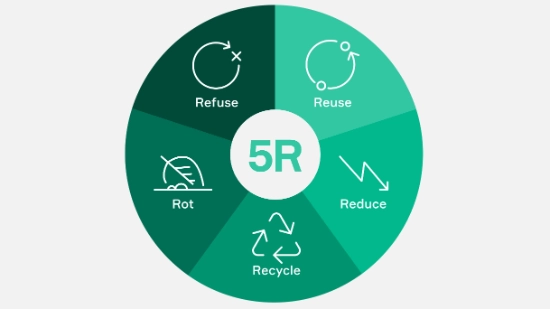
The individual principles demonstrate how this approach can be put into practice. Each of the 5Rs defines clear measures and helps improve the use of materials and resources throughout the entire product life cycle:
Resource-efficient and circular packaging materials
Play to your strengths – know your limits
A range of material groups, each with specific functional properties, can be used for pharmaceutical and nutraceutical packaging. These include recyclable plastics such as polypropylene (PP), high-density polyethylene (HDPE) and polyethylene terephthalate (PET), bio-based polymers, fibre-based materials and recyclates, specifically mechanically or chemically recycled plastics.
However, the choice of material is not primarily based on recyclability, but rather on the protection required for the medication. Barrier properties, stability and regulatory compliance set the framework. At the Packaging Competence Center, we evaluate these parameters in combination to determine the most suitable material for your specific packaging application.
„Sustainability will change pharmaceutical packaging and will pose new challenges for our customers. Specifically, it concerns recyclable packaging. The key is to balance sustainability with product safety, quality and GMP-compliant implementation.‟

Klaus Braig
Vice President Global Sales
Forward-looking solutions for the pharmaceutical industry
Targeted optimisation of material use and circularity
Mono-materials for pharmaceutical packaging
Multi-material composites, such as PVC/aluminium, were long considered the standard for solid-dose packaging due to their functional and economic benefits. However, their permanently bonded material layers significantly impede recycling. Against this backdrop, the transition to mono-materials optimised for recycling is receiving increasing attention. Depending on the packaging structure and the available collection, sorting and recycling infrastructure, packaging made from a single material can offer advantages in terms of material recovery.
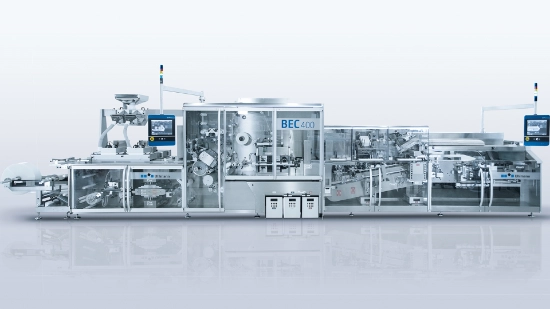
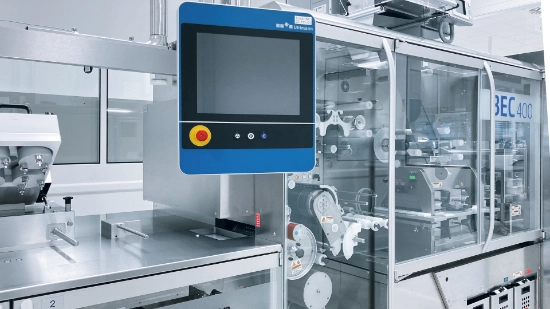
We have been systematically advancing the processing of mono-materials for many years and consistently adapting our machine technology accordingly. The BEC 400, for example, is a compact, modular blister line that reliably processes PP mono-material films to produce the corresponding blister packs. We are also expanding the range of materials available for the secondary packaging of parenteral products: our BLU 200 can package them in PP mono-material blisters.
Our packaging machines and lines can generally be designed or retrofitted to process a range of mono-materials, including PP, PET and HDPE, as well as paper-based solutions.


Cardboard trays for parenteral products
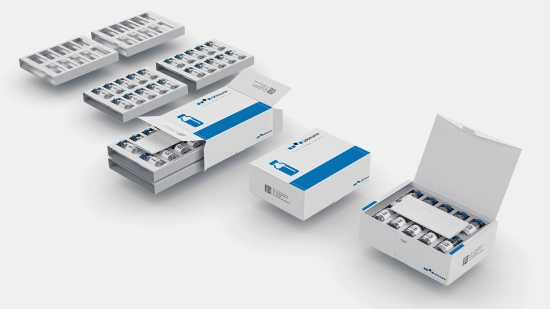
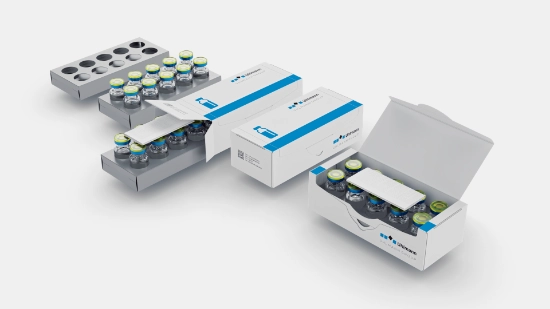
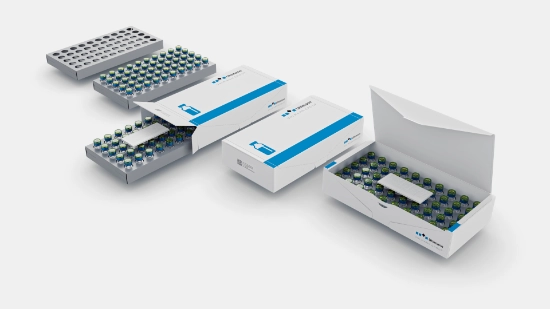
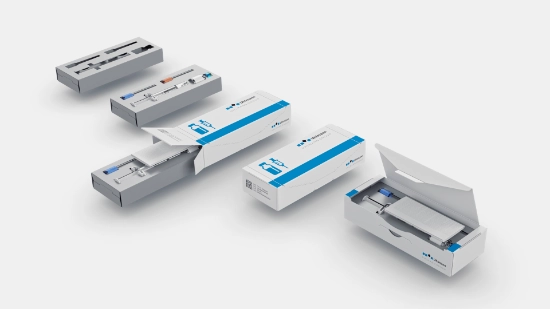
By using cardboard trays, we are switching the secondary packaging of parenteral products to cardboard, replacing plastic while maintaining the same functionality. The slim, lightweight design reduces material use and transport volume, can be recycled through existing paper recycling systems and still provides the necessary stability. Sensitive vials, syringes, ampoules and pens are securely held in place and protected.
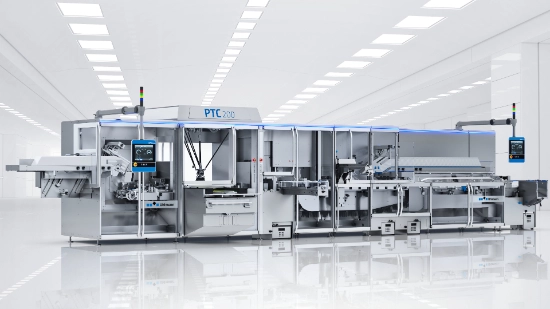
Our PTC 200 packaging line produces cardboard trays in a variety of formats and with different closure mechanisms, including medical device tracking. The following illustrations show a selection of possible variants:
Our end-to-end service
From initial idea to finished product
Use our expertise to develop resource-efficient and circular packaging solutions and introduce them efficiently and reliably. At the Uhlmann Packaging Competence Center, we support you from the initial assessment through to reliable integration into your production processes. The following six steps show how we approach this in practice:
- Define requirements
In a workshop, we work with you to analyze your requirements and circumstances. - Research materials
We identify suitable packaging materials and concepts for your application. - Perform a life cycle assessment
We assess the environmental impact of potential packaging solutions. - Test the packaging
In our test center, we test materials, processes and machine parameters under realistic conditions. - Validate the solution
We validate the selected packaging solution and ensure process stability. - Oversee the start of production
We help you integrate the solution into your production process – whether by installing new machinery or modifying existing equipment.
Printing on packaging materials
We are also on hand to support you with other requirements relating to your packaging solutions. Our technologies enable precise print-mark or registered printing on packaging materials designed for more efficient resource use or improved circularity.